Erectile Dysfunction (ED) is a condition in which a man finds it difficult to achieve or maintain an erection suitable for sexual activity. It is a common health issue that can affect men of different age groups. ED may develop due to medical conditions such as diabetes, high blood pressure, heart disease, hormonal imbalance, nerve disorders, obesity, or psychological factors like stress and anxiety.
While many men respond well to medicines, lifestyle changes, or other non-surgical treatments, some individuals continue to experience erectile problems despite trying multiple options. In such cases, penile implant surgery may be considered as a treatment option.
Penile implant surgery is a medical procedure in which a device is placed inside the penis to help a man achieve an erection when needed. The implant does not increase sexual desire or cure the underlying cause of ED. Instead, it helps create the firmness required for sexual activity.
This treatment is generally considered for men who have not received satisfactory results from medications, injections, vacuum devices, or other ED treatments.
A penile implant may be suitable for men who:
A complete medical evaluation is usually required before deciding whether surgery is an appropriate option.
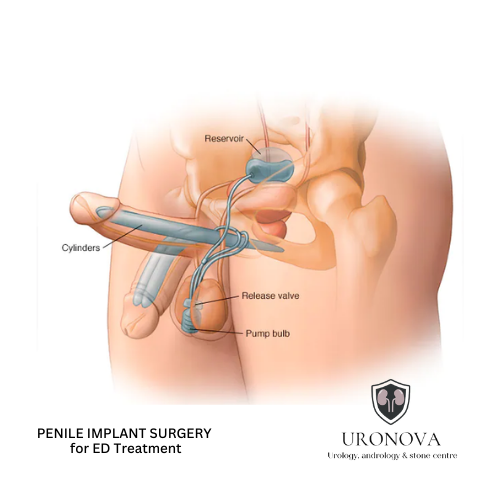
This is the most commonly used type. It contains cylinders placed inside the penis, a pump inside the scrotum, and a fluid reservoir. When the pump is activated, fluid moves into the cylinders, creating an erection. After sexual activity, the device can be deflated.
This type consists of flexible rods placed inside the penis. The penis remains firm but can be adjusted manually into different positions. It has a simpler design and fewer mechanical parts.
The choice of implant depends on the patient’s health condition, lifestyle, and personal preference.
Penile implant surgery is usually performed under anesthesia. During the procedure, the surgeon makes a small incision and places the selected implant inside the erectile tissues of the penis. The exact surgical approach may vary depending on the type of implant being used.
The surgery generally takes about 45 to 90 minutes. Many patients are able to return home on the same day or after a short hospital stay.
Recovery time can differ from one person to another. Most men experience mild pain, swelling, or discomfort for a short period after surgery. Doctors usually recommend:
Many patients are able to return to normal activities within a few weeks, while sexual activity is generally resumed after proper healing and medical advice.
Some potential benefits include:
The exact results can vary depending on the individual’s health condition and expectations.
Like any surgical procedure, penile implant surgery carries certain risks. These may include:
Patients should discuss all benefits and risks with their healthcare provider before making a treatment decision.
A penile implant is designed to help achieve erections, but it does not increase sexual desire, sensation, or fertility. Men who had normal orgasm and ejaculation before surgery generally continue to experience them unless another medical condition affects those functions.
Many men report improved confidence and quality of life after successful treatment, especially when other ED therapies have not provided satisfactory results.
Men living in different parts of Delhi often seek information about advanced treatment options for erectile dysfunction. Areas such as Dwarka, Nagli, and nearby locations have seen increasing awareness regarding men’s health issues, including ED. Understanding available treatment options, their benefits, risks, and recovery process can help patients make informed healthcare decisions.
Whether a person lives in Dwarka, Nagli, or other parts of Delhi, consulting a qualified urology and andrology specialist is important to determine the most suitable treatment plan based on individual health needs.